Why Is Point of Care Testing Important in Modern Healthcare?
Healthcare has always depended on timing. A diagnosis delivered early can prevent complications. A delay of even a few days can change the course of treatment. For decades, laboratory testing required patience: samples were collected, transported, processed, and reported. That system still works and remains essential, but it was built for a healthcare model very different from today’s.
Care is no longer confined to hospitals. It now happens in community clinics, pharmacies, urgent care centers, long-term care facilities, and even patients’ homes. As healthcare has decentralized, diagnostics have had to follow.
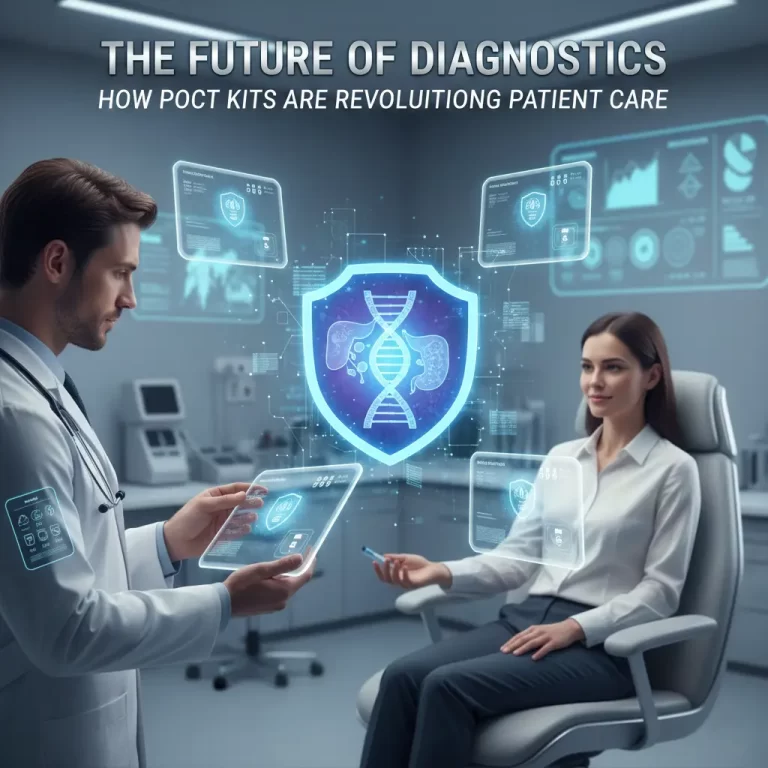
This is where Point of Care Testing becomes important. Point of care testing, often referred to as POCT, involves performing diagnostic tests at or near the site of patient care rather than sending specimens to a centralized laboratory. The goal is not simply convenience; it is to reduce the distance between suspicion and confirmation.
The importance of point of care testing lies in how it changes decision-making. When results are available during the same visit, care becomes more responsive. Providers can act immediately, and patients leave with clarity rather than uncertainty.
But its importance goes deeper than speed. POCT reflects a broader shift in how healthcare systems operate. It redistributes responsibility, expands access, and requires structured oversight outside traditional laboratory walls.
Understanding why point of care testing is important requires looking at both the patient experience and the healthcare system as a whole.
Why Is Point of Care Testing Important?
When people ask why point of care testing is important, they are often thinking about one thing: faster results. And yes, speed is a major factor. But the full answer involves several interconnected reasons.
Point of care testing is important because it:
- Shortens the time between testing and treatment decisions
- Reduces the need for additional appointments
- Improves patient engagement during clinical conversations
- Supports early detection of chronic and infectious conditions
- Enhances workflow efficiency in busy care settings
- Reduces strain on centralized laboratories
- Expands diagnostic access in community environments
Each of these points may seem straightforward on its own. Together, they represent a significant shift in care delivery.
Consider a patient with symptoms of influenza. In a traditional model, a sample may be sent to a lab, and treatment decisions could be delayed. With point of care testing, confirmation happens within minutes, allowing antiviral therapy to begin during the same visit.
Or consider a patient managing diabetes. An HbA1c result available immediately allows medication adjustments without scheduling a follow-up appointment days later.
These are not theoretical benefits. They are practical improvements that affect real patients every day.
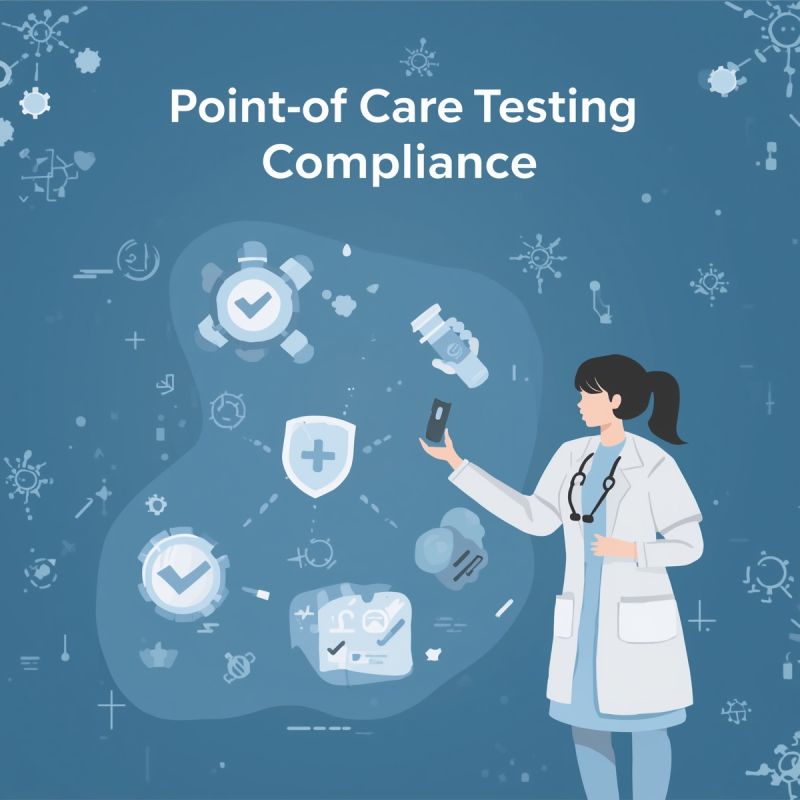
However, the importance of POCT also depends on quality. Without proper training, calibration, and documentation, rapid testing can introduce variability. The value lies in combining accessibility with structured oversight.
What Is Point of Care Testing and Why Do We Need POCT?
Point of care testing refers to medical tests performed close to the patient, rather than in a centralized laboratory environment. The defining feature is proximity: the test happens where care is delivered.
But why do we need POCT if hospitals already have laboratories? The answer lies in how healthcare demand has evolved.
Modern healthcare is:
- More decentralized than ever before
- Managing a growing burden of chronic disease
- Serving aging populations with complex needs
- Operating under pressure to reduce wait times
- Expanding care into community-based settings
Traditional laboratory systems were not designed to carry all of this alone.
We need point of care testing because healthcare is no longer concentrated in one place. Patients seek services in pharmacies. Long-term care facilities manage residents onsite. Urgent care centers handle high volumes of acute cases. POCT aligns diagnostics with these realities.
It allows healthcare providers to:
- Monitor chronic conditions without sending patients elsewhere
- Screen for infectious diseases quickly in high-traffic environments
- Provide diagnostic services in rural or underserved areas
- Reduce unnecessary hospital visits
Point of care testing does not eliminate the need for laboratories. Complex analysis, specialized assays, and confirmatory testing still require centralized infrastructure. But not every clinical decision requires that level of complexity.
We need POCT because healthcare now demands flexibility and responsiveness.
What Is the Main Purpose of Point-of-Care Testing?
The main purpose of point-of-care testing is to support immediate, informed clinical decision-making.
When providers have access to real-time data, they can act with confidence. Treatment plans can be adjusted during the same visit, and conversations with patients are grounded in current information rather than pending results.
Beyond decision-making, the purpose of POCT includes:
- Increasing access to diagnostic services
- Improving efficiency within care environments
- Reducing administrative delays
- Supporting preventive screening initiatives
- Enhancing continuity of care
In community pharmacies, POCT may support chronic disease management. In urgent care settings, it can confirm infectious conditions quickly. In long-term care facilities, it allows routine monitoring without transportation burdens.
There is also a systems-level purpose. By decentralizing certain diagnostics, healthcare systems can reduce bottlenecks. Central laboratories remain essential, but they do not need to process every rapid or routine test.
It is important to note that the purpose of POCT is not to cut corners. It is to integrate rapid diagnostics into care pathways responsibly. Quality management must accompany accessibility. Speed without structure undermines trust. The purpose of point-of-care testing is best fulfilled when governance and technology move together.
Why Do We Need Point of Care Testing When We Usually Go to the Hospital?
This question reflects a common assumption: that hospitals are the primary gateway to diagnostics. In reality, much of healthcare happens outside hospital walls.
Patients with chronic conditions often see primary care providers or pharmacists more frequently than hospital specialists. Residents of long-term care facilities may rarely leave their environment. Urgent care centers handle acute but manageable cases daily. Requiring every diagnostic need to flow through hospital laboratories creates inefficiencies and delays.
Point of care testing is needed because:
- Not all patients require hospital-level care
- Community settings manage increasing diagnostic responsibilities
- Hospital systems are often overburdened
- Immediate results can prevent unnecessary hospital admissions
- Decentralized care models are expanding globally
Imagine an elderly resident in a care facility who requires routine INR monitoring. Transporting that individual to a hospital lab may involve logistical challenges, discomfort, and cost. On-site testing simplifies the process.
Or consider a working adult visiting an urgent care clinic with flu-like symptoms. Rapid confirmation allows treatment to begin immediately, reducing the likelihood of worsening illness.
Hospitals remain critical for complex diagnostics and emergencies, but healthcare is no longer centralized in one place. We need point of care testing because care itself has become distributed.
Broader Impact on Healthcare Systems
The importance of point of care testing also extends to healthcare system resilience.
By decentralizing certain diagnostics, POCT:
- Reduces congestion in hospital laboratories
- Supports surge capacity during outbreaks
- Enables faster triage in high-volume environments
- Improves patient flow in emergency and urgent care settings
- Strengthens community-level care infrastructure
During infectious disease outbreaks, rapid testing capacity at the community level can reduce transmission and relieve hospital pressure.
In chronic disease management, regular monitoring outside hospitals prevents complications that might otherwise require admission.
The broader impact is steady rather than dramatic. POCT supports incremental improvements in efficiency and responsiveness.
Frequently Asked Questions
Yes, when managed properly. The reliability of POCT depends on device validation, regular calibration, quality control checks, and trained personnel. The environment may be decentralized, but standards must remain consistent.
Healthcare delivery is shifting toward community-based models. Pharmacies, urgent care centers, and long-term care facilities now manage many diagnostic needs that once required hospital visits.
Speed alone does not reduce accuracy. However, poor oversight can. Structured quality management ensures that rapid testing remains reliable.
Cost varies by setting. While per-test materials may differ from centralized labs, efficiency gains and reduced follow-up visits often offset expenses.
Providers should evaluate regulatory compliance, staff training requirements, workflow integration, data documentation systems, and ongoing quality control processes.
In many cases, yes. Early detection and timely intervention in community settings can prevent complications that might otherwise require hospitalization.
Conclusion
The importance of point of care testing lies in its practicality.
Healthcare today requires speed, flexibility, and accessibility. Patients expect clarity. Providers need timely information. Systems must operate efficiently under pressure.
Point of care testing addresses these needs by reducing delay and bringing diagnostics closer to where care happens. It shortens the path between suspicion and confirmation. It supports real-time decisions.
At the same time, its value depends on responsible implementation. Rapid testing without quality oversight introduces risk. Governance must expand alongside accessibility.
Point of care testing is important not because it is new, but because it aligns with how modern healthcare operates.
Its role is not to replace laboratories. It is to strengthen the entire diagnostic ecosystem.